
Being Green on the go & sustainable travel
We still like to party. We like to get out and enjoy everything our city offers and being Melbourne based, that is a lot, a lot of festivals, cafes, restaurants, bars, food trucks, markets, cinemas, takeout, pop-ups, parks, beaches etcetera etcetera!
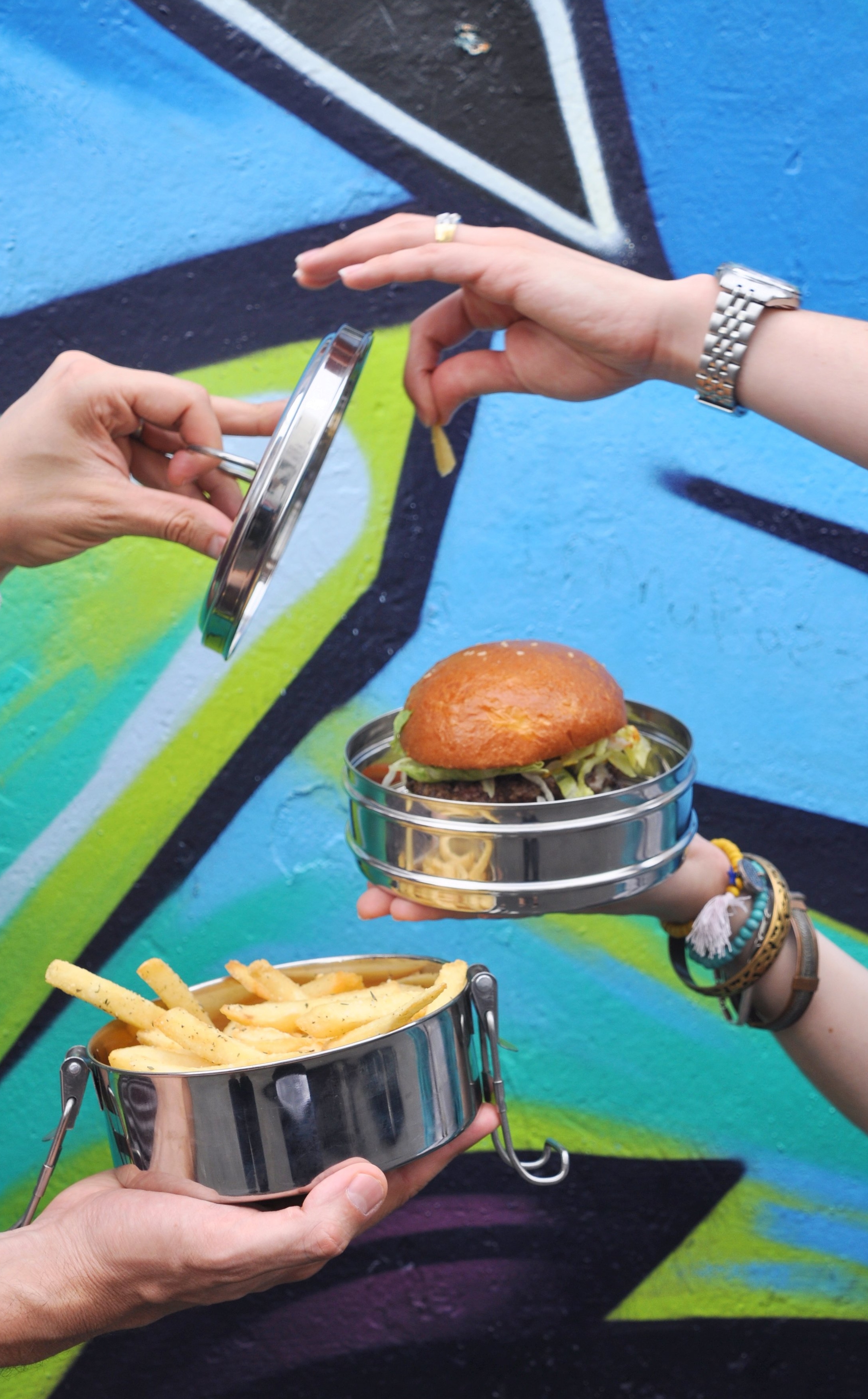
And, we like to do it without carrying a supply of mason jars on our backs!
From that morning coffee on the way to work to that last-minute decision to cross the city to check out a food festival on a Friday night, we let you know how to minimise the waste generated when on the go and going out.
We also tackle zero waste travel and unearth the best ways to traverse the earth without wrecking it.
And, you can sometimes still get away with only taking your keys, wallet and phone if you’re smart about it!
Here’s how to still live life, just with less waste…

What’s the secret to showing up with a single-use-free picnic basket? How can you pull off a zero waste picnic? We share some inspo, tips and easy shared nibbles recipes for keeping picnics as plastic free as possible.
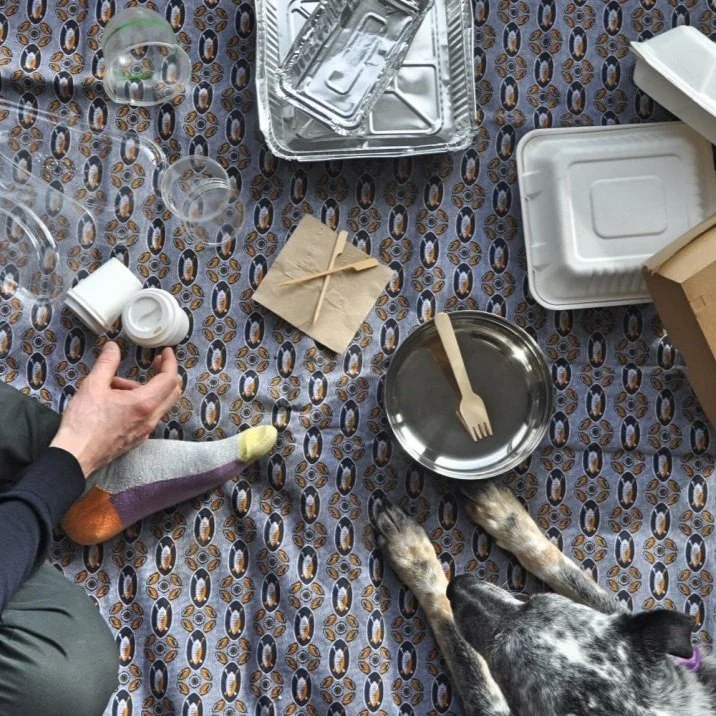
Which of the containers that we picked up during the pandemic at our packaging picnic are actually a plus for the planet? We rate takeaway container options from green to greenwashing to help food places and people pick the most eco-friendly packaging to reduce plastic and other environmental pollution.
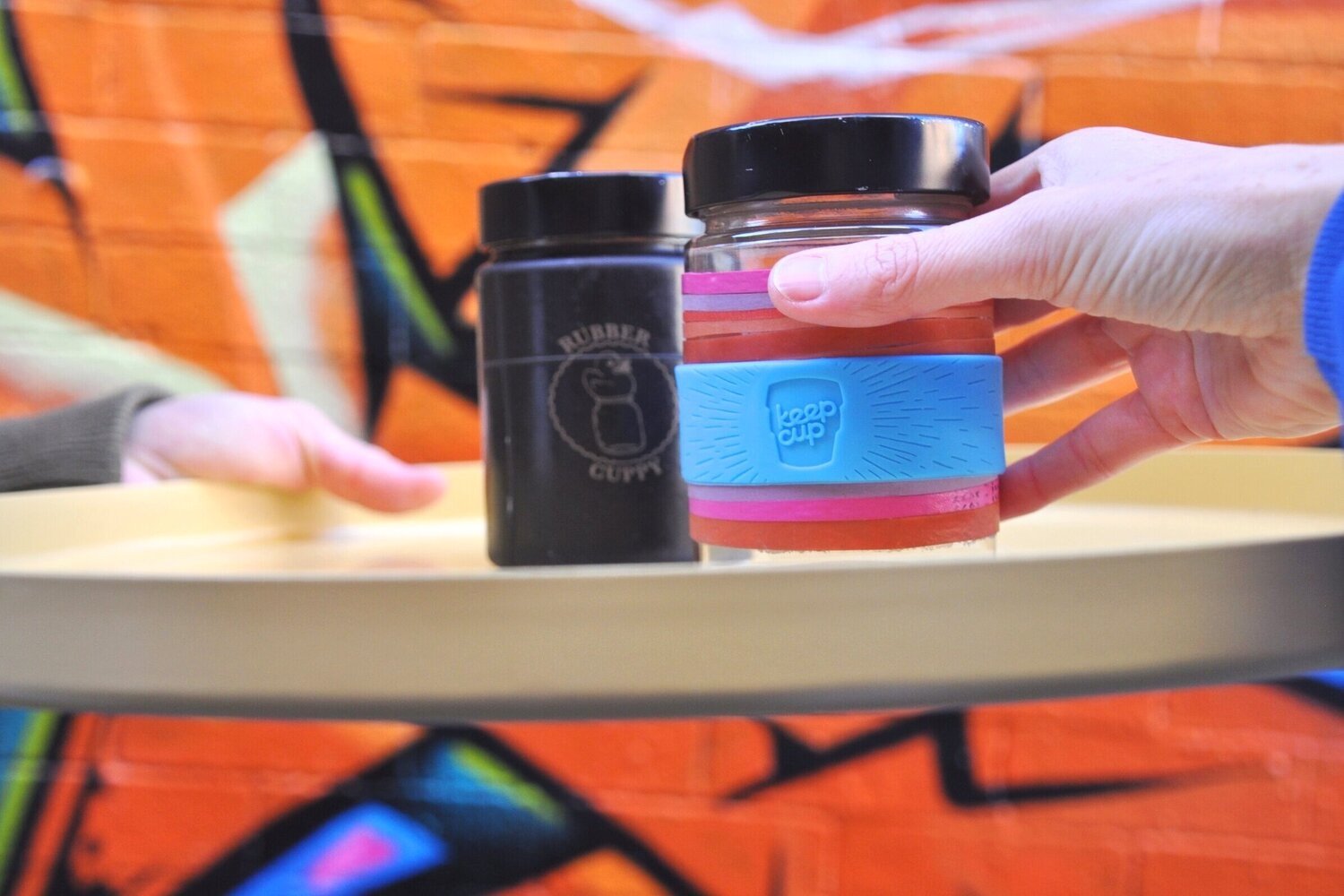
COVID-19 has had many questioning whether it is safe to use reusables and has seen many cafes and restaurants only allowing single-use. We look into whether reusables can be contagious, share how to achieve contactless transfers of food and coffee, and the best way to clean your reusables.

Is the expansion of the reuse systems that have remained up and running during COVID-19 and the adoption of reuse systems by businesses a better way to reuse in the future? We explore why these systems may be better, what is needed for them to be successful, the barriers and benefits of reusable packaging, and the role of legislation.

It can be hard to stay zero waste when travelling. Where do you buy in bulk, compost food waste, and refill your water bottle with water that is safe to drink? How do you find sustainable businesses to support? Luckily, there’s an app for all of that! We list 4 apps that help us stay low waste when travelling.

Justine Law enlightens us on the art of travelling light - why it is important, what it has to do with being sustainable, and how to do it!

Want to avoid plastic and polystyrene takeaway containers and other polluting and wasteful single-use receptacles used for takeout? Follow these 5 steps to maximise your chances of getting food to go in your own BYO container.
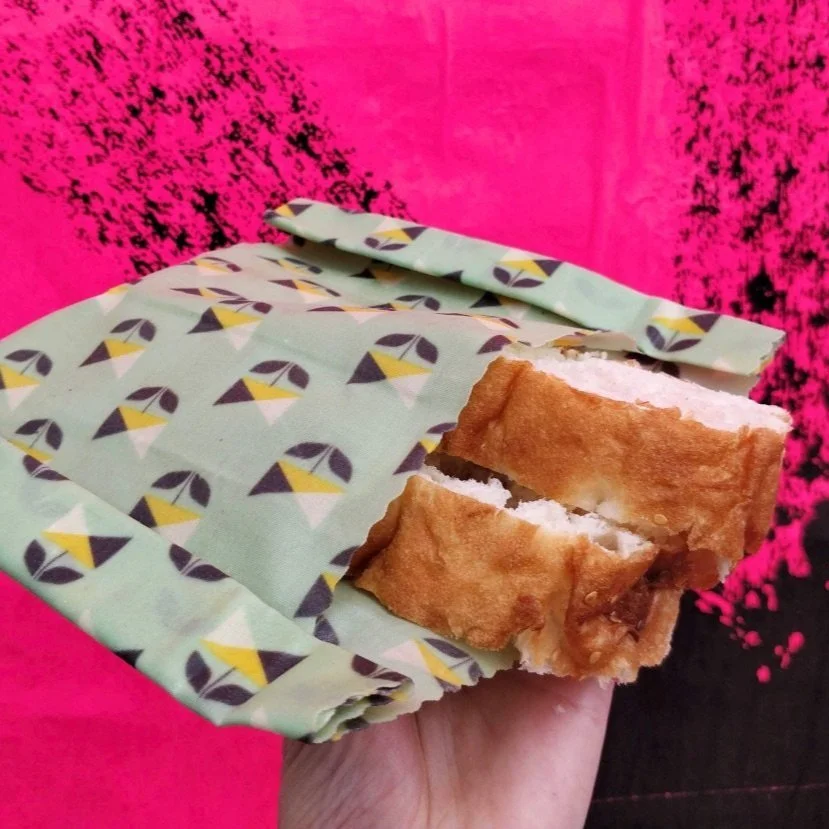
Beeswax wraps can be used in loads of different ways, including as a pouch for getting takeaway food on the go or cheese for a deli. We show you how to fold your beeswax wraps into a sandwich bag to replace plastic baggies.

While flying is by no means sustainable, there are a few ways in which you can reduce the waste you make when you choose to take flight. Here's 10 ways you can lower your impact.

How can you avoid water in plastic bottles when you live in or are travelling in a country with tap water that is undrinkable?

Wondering which reusable food container to go with? Steel or glass? A tiffin or bento box? Insulated or not? Read our complete guide to containers for takeout and lunch boxes for on-the-go, eco-friendly adults and others wanting to reduce their waste but not their lunch options.

You would think getting a reusable straw would be simple, but there are many options and they can be confusing. Learn from our mistakes and choose the best reusable straw for your needs the first time round.

With a zero waste survival kit full of reusables, you won't have to skip that takeaway coffee, miss out on that delicious looking treat or stay clear of smoothies or food trucks. Peer into our backpacks and see what we have on us to live our best waste free lives.
Many are struggling with the cost of living at the moment. How can you reduce your cost of living by reducing your waste? We share 9 ways in which reducing our waste has reduced our spending and cost of living.